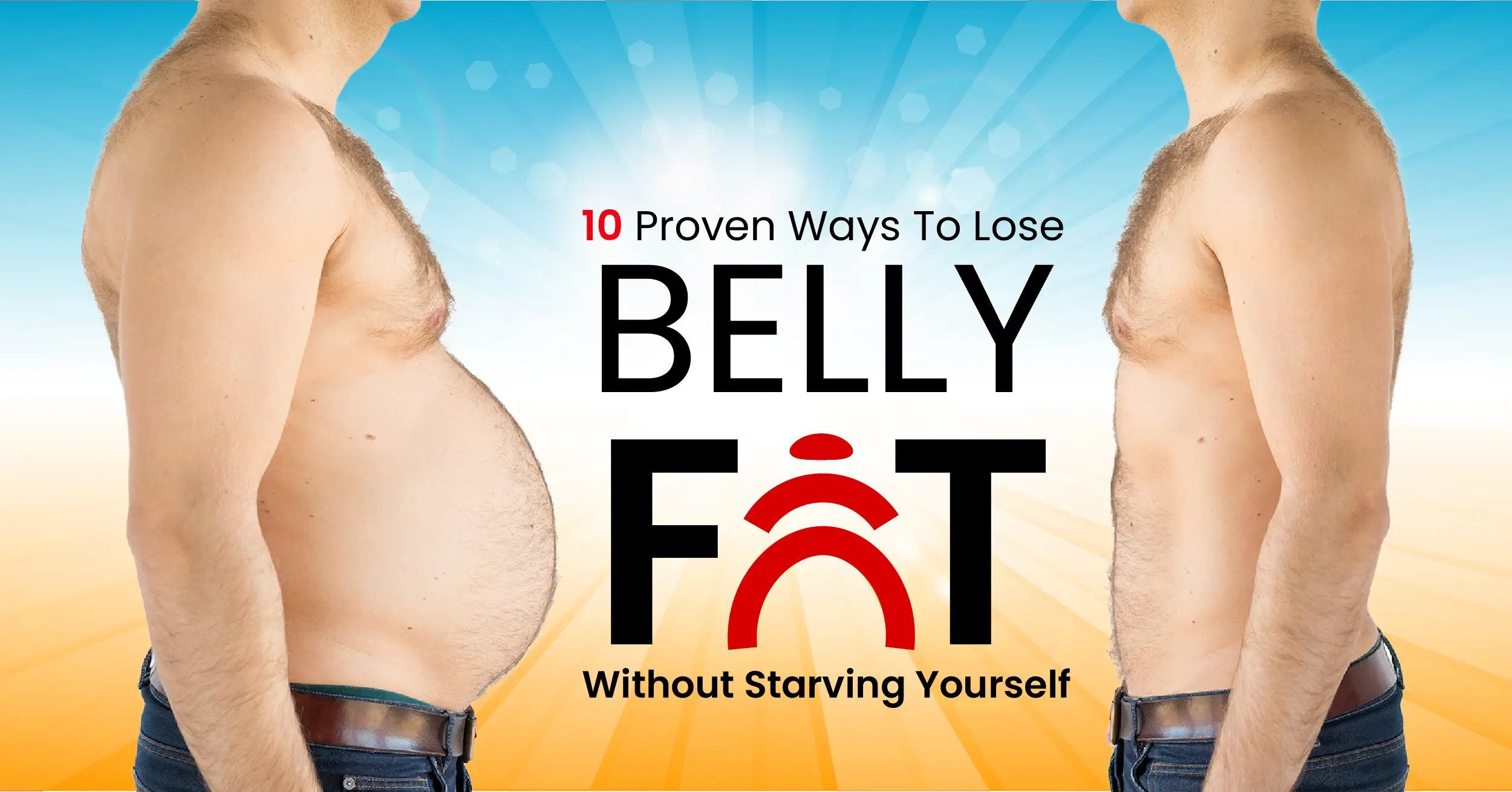
It doesn’t matter what shape your body is in; excess belly fat can not only affect your overall appearance but also can lead to several serious health concerns. When discussing excess body fat, the area where it has accumulated is more significant, as it reflects your overall health and well-being. Recent studies also indicate that deep abdominal fat is more dangerous than the amount you can pinch around the midsection. With age, women’s body waistline and fat proportion begin to increase, while men’s bodies begin to accumulate upper body fat. Men whose waist measures over 40 inches and women with a waistline measuring more than 35 inches are at a higher risk of developing chronic conditions due to visceral fat accumulation. If you are planning to get rid of the mommy pouch even after weight loss or have a healthy body, but your waistline gets bigger, follow these proven ways to lose it without starving.
Understand the Role of Belly Fat in Your Health
Accumulation of belly fat occurs when you consume foods that are high in calories. Excess fat may get deposited in the abdominal region or midsection due to your age, genes, or gender. Sometimes, factors like lack of sleep, high stress levels, and a bad lifestyle might lead to the accumulation of fat along the midsection. There are two variants of belly fat:
Visceral Fat
It is also referred to as VAT or Visceral Adipose Tissue, which is present in the deep abdominal layers. It can also be found surrounding the internal organs like the pancreas, kidneys, and liver. A study by the National Library of Medicine revealed that excess abdominal visceral fat accumulation is connected to type 2 diabetes, high sugar levels, and insulin resistance[1]. This effect might also lead to systemic inflammation in your body by releasing inflammatory chemicals. This fat can disrupt the cortisol, testosterone, and estrogen hormone levels, disrupting body functions. It will also spike your cholesterol and blood pressure levels. Visceral fat is associated with several chronic medical conditions[2], which include:
- Cardiovascular issues
- Colorectal cancer
- Breast cancer
- Asthma
- Dementia
Subcutaneous Fat
Subcutaneous Adipose tissue is present under the skin layers. It has a soft and jiggly texture and is visible along the abdomen and waist. Unlike visceral fat, subcutaneous fat doesn’t cause chronic health issues.
Best Proven Ways To Lose Belly Fat Without Starving
1. Focus on Whole, Unprocessed Foods
- Avoid Ultra-processed Foods: Highly processed foods contain trans fats, which can cause inflammation and lead to the accumulation of visceral fat. Avoid readymade foods, instant noodles, processed meats, and packaged snacks that contain partially hydrogenated oil as one of the ingredients. A study held in 2024 showed that consumption of ultra-processed foods raised waist circumference and caused abdominal obesity[3]. The participants who binged on ultra-processed foods had up to 49% risk of developing belly fat than others.
- Add Whole Grains: Include whole grains like oats, brown rice, and quinoa that are packed with nutrients and can keep you fuller for a long time.
2. Include High-Protein Foods in Every Meal
High-protein meals can promote satiety, enhance metabolism rate, prevent muscle loss, and accelerate calorie burning even while you sleep. Include protein-rich foods like legumes, Greek yogurt, tofu, eggs, and chicken in every meal. Your diet must contain at least 30% to 35% protein to curb hunger, cut down cravings, and reduce belly fat while promoting weight loss. Consuming protein regularly will help in cutting down the production of the ghrelin hormone in your blood, which can trigger cravings and hunger[4]. Begin your breakfast with a high-protein source like cottage cheese, beans, eggs, nuts, or salmon to feel fuller throughout the day[5].
3. Drink Plenty of Water and Avoid Sugary Beverages
Several studies have revealed that drinking water before a meal will cut down calorie consumption, control appetite, boost metabolism, and promote weight loss[6]. Aim to drink 8 cups or 2 litres of water each day and a glass of water half an hour before your meal. Replace your sugary drinks like juice and soda with water to avoid excess calorie consumption[7]. You can also infuse fresh lemon wedges, strawberries, and oranges to enjoy flavoured water.
4. Incorporate Regular Exercise: Cardio and Strength Training
Cardio workouts or aerobic exercises are created to target the visceral fat in the belly and cut down your waist circumference[8]. Performing at least 75 minutes of extreme cardio workouts like HIIT or running, or cardio workouts of high intensity like cycling or brisk walking for 150 minutes every week will help you lose belly fat quickly[9]. The study by Harvard Health also showed that walking briskly for at least half an hour for 5 days once a week helped cut down belly fat[10]. Cardio workouts can increase both your respiratory rate and heart rate to cut down your waistline and promote fat loss[11]. Strength training increases your body’s fat-burning ability by increasing your metabolic rate at rest. Combining strength training with cardio will help you lose more visceral fat in the abdominal region.
5. Prioritize Quality Sleep
It is essential to get at least 8 to 9 hours of sleep every day, as sleeping less than 7 hours will put you at a higher risk of developing obesity and other chronic issues[12]. Lack of sleep can take a toll on your metabolic rate and can cause less calorie burning. It will also induce changes in the insulin and blood sugar levels, leading to type 2 diabetes.
6. Limit Refined Carbs and Added Sugars
High-calorie food items like sweets, snacks, and white bread contain a high amount of sugar and refined carbohydrates. Regular consumption of such foods will lead to obesity and belly fat[13]. Desserts and juice containing added sugar can increase belly fat and induce metabolic disorders[14]. Cutting down processed snacks, instant foods, and drinks with refined carbs and sugar will help lose abdominal visceral fat and promote metabolism[15].
7. Track Your Progress and Stay Consistent
It is essential to maintain a food journal or use progress tracking apps to lose belly fat quickly. Practice mindful eating while enjoying the flavours and food texture to feel satiated while losing weight[16]. You can also get a professional nutritional plan from fitness experts at Kolors to get rid of belly fat effectively and monitor your progress to stay consistent with weight loss. You can keep an eye on what you eat, the calories you consume per meal, track waist measurements, and overall body weight periodically to get consistent results.
8. Manage Stress
Chronic stress will elevate the levels of hormones like adrenaline and cortisol in your bloodstream [17]. Fluctuations in these hormone levels will eventually lead to extreme weight gain and high appetite levels, causing binge eating. A study held in 2016 showed that a low-calorie diet, along with a stress management program for 8 weeks, helped the participants to experience low obesity risks and achieve weight loss[18]. You can follow stress management methods like walking, meditation, Tai Chi, yoga, and deep breathing techniques to keep cortisol levels low.
9. Include Healthy Fats
Healthy fats are essential for supporting regular bodily functions, making them a compelling addition to your meal. Include nut butters, seeds, nuts, olive oil, and avocados to keep cravings away. A study held in 2023 found that consuming a Mediterranean diet loaded with healthy fats helped with weight loss and maintained a healthy body weight range[19]. A diet with healthy fats keeps your body fat composition under control and helps with weight loss.
10. Load Your Plate with Fiber
Your diet must have a lot of legumes, whole grains, fruits, and vegetables loaded with rich fiber. These foods contain soluble fiber that draws in water and slows down the food-passing process through the digestive tract. So, calorie absorption will be lower, and you will feel satiated for longer hours.
Reference Links:
- Janie C. DiNatale, Amy C. Ellis, Jamy D. Ard, Julie L. Locher, Kristi M. Crowe-White – https://onlinelibrary.wiley.com/doi/10.1002/oby.20096
- Howard E. LeWine, MD, Chief Medical Editor, Harvard Health Publishing – https://www.health.harvard.edu/newsletter_article/taking-aim-at-belly-fat
- Dicken SJ, Batterham RL. Ultra-processed Food and Obesity: What Is the Evidence? Curr Nutr Rep. 2024 Mar;13(1):23-38. doi: 10.1007/s13668-024-00517-z. Epub 2024 Jan 31. PMID: 38294671; PMCID: PMC10924027.- https://pmc.ncbi.nlm.nih.gov/articles/PMC10924027/
- Moon J, Koh G. Clinical Evidence and Mechanisms of High-Protein Diet-Induced Weight Loss. JOMES 2020;29:166-173. – https://www.jomes.org/journal/view.html?doi=10.7570/jomes20028
- Shaoyun Wang, Lijuan Yang, Juming Lu, Yiming Mu; High-Protein Breakfast Promotes Weight Loss by Suppressing Subsequent Food Intake and Regulating Appetite Hormones in Obese Chinese Adolescents. Horm Res Paediatr1 February 2015; 83 (1): 19–25. – https://karger.com/hrp/article-abstract/83/1/19/162451/High-Protein-Breakfast-Promotes-Weight-Loss-by?redirectedFrom=fulltext
- Brenda M. Davy, Kevin P. Davy, J. Tina Savla, Benjamin Katz, Kristen Howard, Erica Howes, Elaina Marinik, Eleni Laskaridou, Molly Parker, Aubrey Knight – https://onlinelibrary.wiley.com/doi/10.1002/oby.21167
- Maria Luger, Max Lafontan, Maira Bes-Rastrollo, Eva Winzer, Volkan Yumuk, Nathalie Farpour-Lambert – https://karger.com/ofa/article/10/6/674/239560/Sugar-Sweetened-Beverages-and-Weight-Gain-in
- Oh, D.-H.; Lee, J.-K. Effect of Different Intensities of Aerobic Exercise Combined with Resistance Exercise on Body Fat, Lipid Profiles, and Adipokines in Middle-Aged Women with Obesity. Int. J. Environ. Res. Public Health 2023, 20, 3991. https://doi.org/10.3390/ijerph20053991 – https://www.mdpi.com/1660-4601/20/5/3991
- Yuan Li, Qun Zhai, Ge Li & Weihang Peng. (2024) Effects of Different Aerobic Exercises on Blood Lipid Levels in Middle-Aged and Elderly People: A Systematic Review and Bayesian Network Meta-Analysis Based on Randomized Controlled Trials. Healthcare12:13, pages 1309. – https://www.tandfonline.com/doi/full/10.1080/07399332.2021.1900190
- Williams PT, Thompson PD. Walking versus running for hypertension, cholesterol, and diabetes mellitus risk reduction. Arteriosclerosis, thrombosis, and vascular biology. 2013 May;33(5):1085-91. – https://nutritionsource.hsph.harvard.edu/walking/
- Physical Activity Guidelines for Americans, 2nd edition | 2018 U.S. Department of Health and Human Services – https://odphp.health.gov/sites/default/files/2019-09/Physical_Activity_Guidelines_2nd_edition.pdf
- Liu Y, Wheaton AG, Chapman DP, Cunningham TJ, Lu H, Croft JB. Prevalence of Healthy Sleep Duration among Adults — United States, 2014. MMWR Morb Mortal Wkly Rep 2016;65:137–141. – https://www.cdc.gov/mmwr/volumes/65/wr/mm6506a1.htm
- Papatriantafyllou, E.; Efthymiou, D.; Zoumbaneas, E.; Popescu, C.A.; Vassilopoulou, E. Sleep Deprivation: Effects on Weight Loss and Weight Loss Maintenance. Nutrients 2022, 14, 1549. https://doi.org/10.3390/nu14081549 – https://www.mdpi.com/2072-6643/14/8/1549
- Wan Y, Tobias D K, Dennis K K, Guasch-Ferr̩ M, Sun Q, Rimm E B et al. Association between changes in carbohydrate intake and long term weight changes: prospective cohort study BMJ 2023; 382 :e073939 doi:10.1136/bmj-2022-073939 Рhttps://www.bmj.com/content/382/bmj-2022-073939
- Malik, V.S., Hu, F.B. The role of sugar-sweetened beverages in the global epidemics of obesity and chronic diseases. Nat Rev Endocrinol18, 205–218 (2022). https://doi.org/10.1038/s41574-021-00627-6 – https://www.nature.com/articles/s41574-021-00627-6
- Faruque S, Tong J, Lacmanovic V, Agbonghae C, Minaya DM, Czaja K. The Dose Makes the Poison: Sugar and Obesity in the United States – a Review. Polish Journal of Food and Nutrition Sciences. 2019;69(3):219–233. doi:10.31883/pjfns/110735. – https://journal.pan.olsztyn.pl/The-Dose-Makes-the-Poison-Sugar-and-Obesity-in-the-United-States-,110735,0,2.html
- Faruque, S., Tong, J., Lacmanovic, V., Agbonghae, C., Minaya, D. M. & Czaja, K. (2019). The Dose Makes the Poison: Sugar and Obesity in the United States – a Review. Polish Journal of Food and Nutrition Sciences, 69(3), 219–233. https://doi.org/10.31883/pjfns/110735 – https://onlinelibrary.wiley.com/doi/10.1111/obr.12623
- Baudrand, Renea; Vaidya, Anandb. Cortisol dysregulation in obesity-related metabolic disorders. Current Opinion in Endocrinology & Diabetes and Obesity 22(3):p 143-149, June 2015. | DOI: 10.1097/MED.0000000000000152 – https://journals.lww.com/co-endocrinology/abstract/2015/06000/cortisol_dysregulation_in_obesity_related.2.aspx
- Stavrou S, Nicolaides NC, Papageorgiou I, Papadopoulou P, Terzioglou E, Chrousos GP, Darviri C, Charmandari E. The effectiveness of a stress-management intervention program in the management of overweight and obesity in childhood and adolescence. J Mol Biochem. 2016;5(2):63-70. Epub 2016 Jul 31. PMID: 27570747; PMCID: PMC4996635. – https://pmc.ncbi.nlm.nih.gov/articles/PMC4996635/
- Ligia J. Dominguez, Nicola Veronese, Giovanna Di Bella, Claudia Cusumano, Angela Parisi, Federica Tagliaferri, Stefano Ciriminna, Mario Barbagallo,- https://www.sciencedirect.com/science/article/pii/S0531556523000426?via%3Dihub