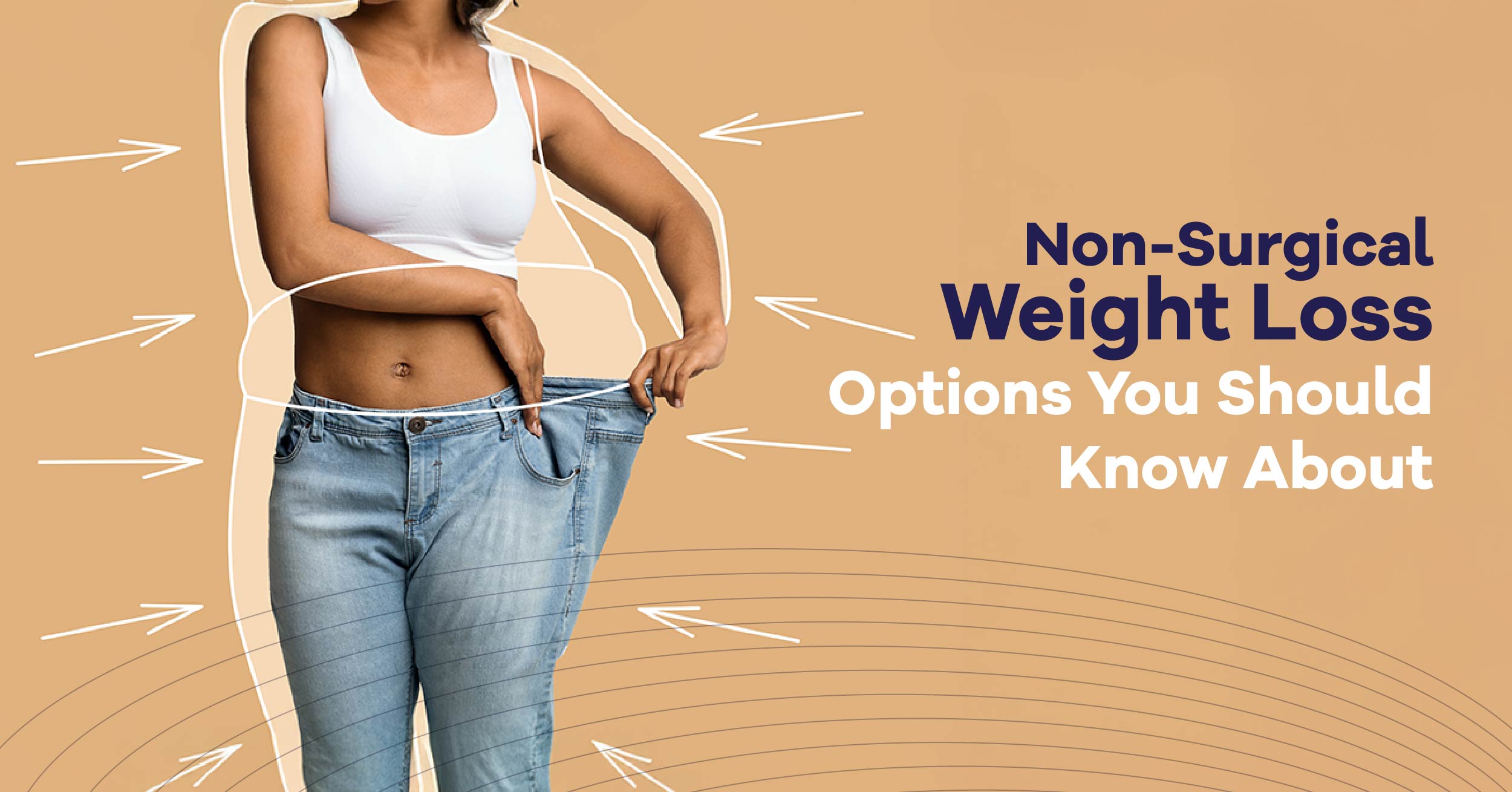
For people dealing with obesity, weight loss surgeries are considered an effective solution to ditch stubborn fat. Even though surgical procedures can deliver dramatic outcomes, not everyone is eligible or ready to go under the knife. Thankfully, several non-surgical weight loss treatments can help you lose excess body weight effectively and safely. While invasive weight loss methods can be life-changing, they have a fair share of risks and downtime. Some of you might not be medically fit to undergo an invasive procedure or have concerns regarding the risks. Non-invasive procedures are an ideal choice if you are already healthy but wish to lose some stubborn fat in a gradual and less invasive way[1]. Though these non-surgical options may not offer rapid weight loss results instantly, they can offer sustainable outcomes when coupled with perfect medical intervention, expert guidance, and commitment[2]. Keep reading to learn more about some of the highly promising non-surgical weight loss treatments to make a well-informed health decision.
What Is Non-Surgical Weight Loss?
Non-surgical weight loss is a revolutionary procedure that rules out the need for surgical options. Such non-invasive alternatives have achieved immense popularity among people who are on the lookout for a safe method to remove excess fat without downtime or risks[3]. The basic principle behind non-surgical weight loss procedures is removing fat cells in targeted areas by applying cooling or energy-based technologies[4]. Such non-invasive methods focus on cutting down the fat cells in specific areas by freezing or heating them. These damaged fat cells will then be eliminated naturally through your body’s flushing process within a few weeks or months.
These non-surgical weight loss treatments are effective for targeting stubborn fat pockets in thighs, belly, flanks, and chin that are resistant to low-calorie diets and workouts[5]. Such non-invasive treatments are perfect for people who are close to their ideal body weight but have to deal with stubborn fat deposits. These treatments are body contouring solutions designed to refine your overall appearance[6]. Non-surgical weight loss treatments are popular for the following reasons:
- Doesn’t require anaesthesia
- Non-invasive
- Zero downtime
- Safe and proven, as it is medically supervised
- Targeted fat burning and weight loss solution
- Customizable treatments
- No surgical scars
- Offers sustainable results
Best Non-Surgical Weight Loss Options
Non-surgical weight loss treatments help you manage your body weight without any complications and will not disrupt your everyday activities. These non-invasive options for weight loss can help you get a better body shape and get rid of stubborn fat deposits without surgery[7].
1. Medically Supervised Weight Loss Programs
These physician-led non-surgical weight loss programs are customized to meet your unique and specific needs. These physician-supervised non-surgical weight loss plans will have:
- Low-calorie diet plans
- Regular health monitoring by physicians
- Behaviour modification therapy
- Prescription medications for weight loss
- Individualised diet plans
As these personalised weight loss programs are supervised by physicians, such programs are more effective and safer than a regular diet. Such non-surgical, medically supervised weight loss programs aim at making lifestyle modifications for the long term, making them a more valuable choice than surgical options.
2. Prescription Medications for Weight Management
Your physician will prescribe FDA-approved medications that can help with weight loss if you are having obesity-related medical issues like high blood pressure or type 2 diabetes[8]. These weight management prescription medications include:
- Orlistat
- Semaglutide[9]
- Bupropion-naltrexone
- Phentermine-topiramate
These prescription medications for weight management work by controlling your body’s fat absorption limit, promoting satiety, and lowering appetite. Though not an overnight weight loss miracle, these medications can improve weight loss results when combined with a calorie-restricted diet and workouts.
3. Fat-Freezing Treatments (Cryolipolysis)
CoolSculpting is a non-surgical treatment option that is performed with extreme cold energy to dissipate fat cells and cut down fat deposits in your body[10]. Each session of Cryolipolysis takes 30 to 60 minutes per session and can eliminate up to 25% of fat[11]. A device shaped like a cup or panel will be used by your surgeon on the targeted area to transmit cool energy with a specific temperature to freeze the fat cells and destroy them. As your nerves, skin, and muscles tend to freeze at low temperatures when compared to fat cells, the surrounding tissue will not be damaged. Cryolipolysis is an FDA-cleared procedure to eliminate fat cells under your chin, buttocks, upper arms, back, or outer thighs. You may experience mild or temporary side effects like tingling, redness, numbness, and swelling. The results of Cryolipolysis are visible in a month.
4. Radiofrequency And Ultrasound Fat Reduction
This non-surgical fat reduction uses ultrasound or radiofrequency energy to damage the fat cells in the treatment site. These fat cells are metabolized naturally by the body and help in cutting down the size of fat pockets. The ultrasound or radiofrequency energy penetrates through your skin by causing pressure alterations to break down the fat cells[12]. This process lowers the fat pockets by eliminating the broken-down fat cells through natural metabolism. Such FDA-cleared treatments utilize high-intensity and pulsed ultrasound technologies to focus on the fat cells in targeted parts. There is no downtime or side effects with these non-surgical weight loss treatments.
5. Injectable Fat Dissolvers
Injectables containing deoxycholic acid that mimic the body’s natural substance help in breaking down the fat cells[13]. This fat-dissolving substance in injectables damages fat cells present in fat deposit areas. It is a perfect treatment for eliminating a double chin by cutting down submental fullness. This treatment is performed by administering several injections featuring ultra-thin needles. These fat-dissolving injectables will require up to 4 treatment sessions with 1 month spacing between each session that lasts about 20 minutes. Some common side effects of these injectables include bruising, redness, swelling, and numbness.
6. Endoscopic Weight Loss Procedures
These minimally invasive endoscopic weight loss options are not performed by making a lot of incisions. If you are already making effective lifestyle modifications, then these weight loss procedures assisted by endoscopy will be a perfect choice.
- ESG or Endoscopic Sleeve Gastroplasty: This incision-free procedure is minimally invasive, designed to cut down the stomach size, and sutures are performed with an endoscopy device. After this procedure, your food intake levels will be much lower, and achieving satiety becomes easier while helping you lose weight quickly. With this procedure, you will be able to lose up to 20% of your body weight in one year. There are no scars and minimal downtime. It is effective for people with a BMI of 30 to 40 along with diet and workout[14].
- Gastric Balloon: This procedure is performed to place a temporary balloon-like device filled with saline inside the stomach to keep you fuller and cut down food consumption levels. This balloon will stay intact for a period of 6 months and will help you lose up to 15% of your overall body weight. It is ideal for people with a high BMI ranging between 30 and 40.
Choosing The Right Non-Surgical Option for You
When choosing a perfect non-surgical weight loss method, it is essential to consider various factors to meet your specific body needs and fulfill health goals.
- Current Health Status: Always consider your present health state and know whether there is any underlying medical issue behind your weight gain. Discuss it with your physician and select a suitable non-invasive weight loss method that fulfils your needs.
- Previous Weight Loss History: Think about your past weight loss attempts and realize why they didn’t work as expected. Learn from those past experiences and create a better strategy coupled with a workout and diet to achieve your weight loss goals.
- Weight Loss Goals: Have a clear-cut idea about your weight loss goals and decipher how much weight you wish to lose. Also, set a specific time frame for losing weight while being realistic, reasonable, and consistent.
- Consider Your Lifestyle: When choosing a non-invasive weight loss method, first pay attention to your lifestyle and daily routine. Discuss with your physician regarding your diet preferences, daily activities, time available for meal prep, and food restrictions, if any.
- Research About Effectiveness: Analyse and research to find any scientific evidence that proves the safety and effectiveness of any weight loss method. Search for credible information, like recommendations by healthcare professionals, or read studies that are peer-reviewed. Do not opt for approaches or fad diets that don’t have any substantial evidence.
- Check for Sustainability: Consider the long-term viability of the non-surgical weight loss option that you intend to choose. Do not go for weight loss methods that support drastic or instant weight loss, as it might cause recurrence of weight gain. Go for a weight loss method that offers slow yet steady results to get long-lasting outcomes.
- Continued Guidance and Support: Approach a reputed clinic like Kolors Healthcare with expert physicians, registered dieticians, and staff to give you continuous guidance and support. It will help achieve ideal body weight through medically supervised programs and other non-surgical weight loss options.
Reference Links:
- Shek, S. Y. Y., & Chan, N. P. (2014). Non-invasive subcutaneous fat reduction: A review. Lasers in Surgery and Medicine, 46(7), 542–552. – https://www.researchgate.net/publication/272095955_Non-invasive_subcutaneous_fat_reduction_A_review
- Bond DS, Phelan S, Leahey TM, Hill JO, Wing RR. Weight-loss maintenance in successful weight losers: surgical vs non-surgical methods. Int J Obes (Lond). 2009 Jan;33(1):173-80. doi: 10.1038/ijo.2008.256. Epub 2008 Dec 2. PMID: 19050676; PMCID: PMC2624545. – https://pmc.ncbi.nlm.nih.gov/articles/PMC2624545/#:~:text=Of%20the%20315%20participants%20eligible,years;%20p%20=%200.001
- Dombrowski S U, Knittle K, Avenell A, Ara̼jo-Soares V, Sniehotta F F. Long term maintenance of weight loss with non-surgical interventions in obese adults: systematic review and meta-analyses of randomised controlled trials BMJ 2014; 348 :g2646 doi:10.1136/bmj.g2646 Рhttps://www.bmj.com/content/348/bmj.g2646
- Diane Irvine Duncan, Suneel Chilukuri, David Kent, Klaus Hoffmann and Lim Tingsong Submitted: 17 June 2021 Reviewed: 26 October 2021 Published: 23 January 2022 DOI: 10.5772/intechopen.101396 – https://www.intechopen.com/chapters/80193
- American Board of Cosmetic Surgery. (n.d.). Non-surgical fat reduction. – https://www.americanboardcosmeticsurgery.org/procedure-learning-center/non-surgical/fat-reduction/
- Barel E, Amir A, Olshinka A, Ad-El D. Non-invasive focused ultrasound for abdominal circumference reduction: does it really work?. Plast Aesthet Res. 2016;3:368-74. http://dx.doi.org/10.20517/2347-9264.2015.81 – https://www.oaepublish.com/articles/2347-9264.2015.81
- Alizadeh Z, Halabchi F, Mazaheri R, Abolhasani M, Tabesh M. Review of the Mechanisms and Effects of Noninvasive Body Contouring Devices on Cellulite and Subcutaneous Fat. Int J Endocrinol Metab. 2016 Jul 3;14(4):e36727. doi: 10.5812/ijem.36727. PMID: 28123436; PMCID: PMC5236497. – https://pmc.ncbi.nlm.nih.gov/articles/PMC5236497/
- Lourdes Carrillo Fernández, Julio Sagredo Pérez, Clara Guede Fernández, Noelia Sanz Vela, Algoritmo de diagnóstico y tratamiento del sobrepeso y obesidad 2025 de la redGDPS, Diabetes práctica, (49), (2026). – https://www.nejm.org/doi/full/10.1056/NEJMoa2307563
- Medicines and Healthcare products Regulatory Agency. (2024, July 23). MHRA approves GLP-1 receptor agonist semaglutide to reduce risk of serious heart problems in obese or overweight adults. GOV.UK. – https://www.gov.uk/government/news/mhra-approves-glp-1-receptor-agonist-semaglutide-to-reduce-risk-of-serious-heart-problems-in-obese-or-overweight-adults
- Ingargiola MJ, Motakef S, Chung MT, Vasconez HC, Sasaki GH. Cryolipolysis for fat reduction and body contouring: safety and efficacy of current treatment paradigms. Plast Reconstr Surg. 2015 Jun;135(6):1581-1590. doi: 10.1097/PRS.0000000000001236. PMID: 26017594; PMCID: PMC4444424.- https://pmc.ncbi.nlm.nih.gov/articles/PMC4444424/
- Krueger N, Mai SV, Luebberding S, Sadick NS. Cryolipolysis for noninvasive body contouring: clinical efficacy and patient satisfaction. Clin Cosmet Investig Dermatol. 2014 Jun 26;7:201-5. doi: 10.2147/CCID.S44371. PMID: 25061326; PMCID: PMC4079633. – https://pmc.ncbi.nlm.nih.gov/articles/PMC4079633/
- Kiedrowicz M, Duchnik E, Wesołowska J, Bania B, Peregud-Pogorzelska M, Maciejewska-Markiewicz D, Stachowska E, Kruk J, Marchlewicz M. Early and Long-Term Effects of Abdominal Fat Reduction Using Ultrasound and Radiofrequency Treatments. Nutrients. 2022 Aug 25;14(17):3498. doi: 10.3390/nu14173498. PMID: 36079758; PMCID: PMC9459719.- https://pmc.ncbi.nlm.nih.gov/articles/PMC9459719/
- British Heart Foundation. (n.d.). Weight-loss injections explained. – https://www.bhf.org.uk/informationsupport/heart-matters-magazine/medical/weight-loss-injections-explained#:~:text=weight%2Dloss%20injections-,Mounjaro%20(tirzepatide),can%20also%20reduce%20your%20appetite
- National Institute of Diabetes and Digestive and Kidney Diseases. (n.d.). Body mass index (BMI). U.S. Department of Health and Human Services, National Institutes of Health. – https://www.niddk.nih.gov/Dictionary/B/Body-Mass-Index—BMI