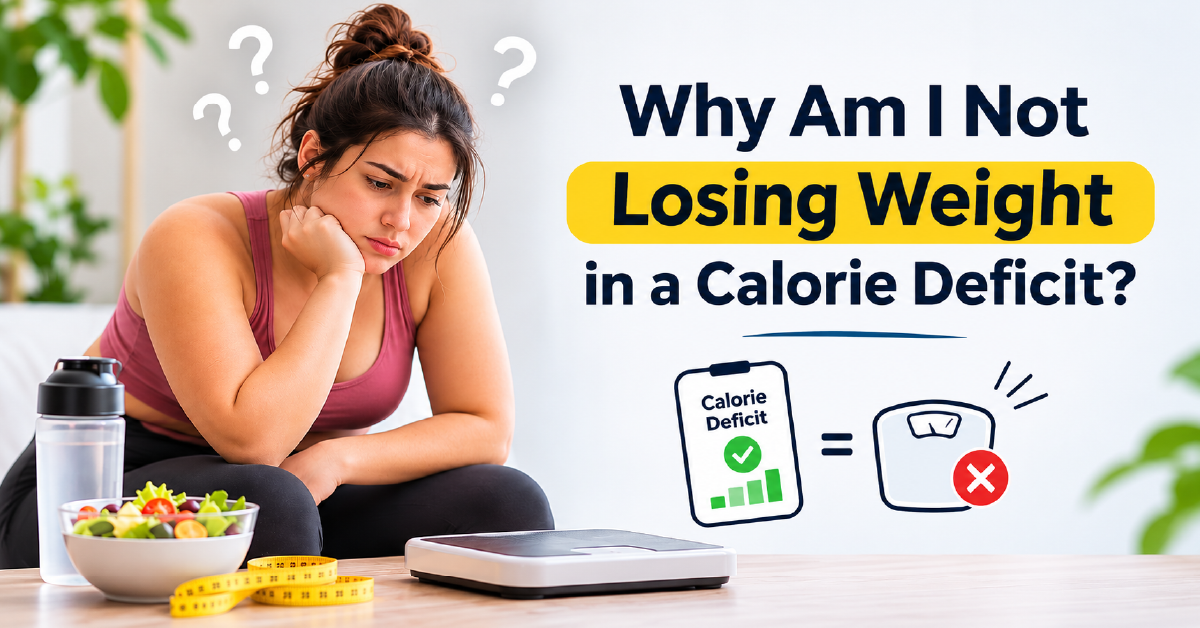
While trying to achieve weight loss, many would have already told you that when you eat few calories, you will lose a lot of weight. But even when you are consuming fewer calories than the amount you burn, you might find there is no difference in your body weight. Sometimes, the cooking oil you use, salad dressing, butters, sauces, or even alcohol might be the hidden culprits spoiling your weight loss efforts. If you are not losing weight on a calorie deficit diet, it indicates that you are not following a structured plan. Instead of feeling frustrated for not losing weight at the desired pace or having hit a plateau[1], consult the experts at Kolors Healthcare to have a customized calorie deficit diet plan[2], personalized workouts, and a structured plan to get back on the right track. Keep reading to understand some of the best reasons why you are not losing weight despite following a calorie deficit approach.
If you are struggling to see progress despite dietary and lifestyle changes, explore the personalised weight loss programs at Kolors Healthcare for individualised guidance.
Understanding Calorie Deficit Approach
You will achieve a calorie deficit when you begin to consume fewer calories than required by your body. For instance, when you have a maintenance level of 2200 calories, and you are following an 1800-calorie diet, it indicates that you are maintaining a deficit of 400 calories[3]. With time, it will cause weight loss, as your body will begin to use up the fat reserves to convert them into energy. However, it is not related to just numbers, as it is influenced by factors like accuracy in food measurements, changes in workouts, and food’s thermic effect. Such tiny errors in overestimating workout burn or tracking food might silently overcome your deficit. It explains why you are not losing weight in a calorie deficit despite putting in extra efforts.
Understanding how many calories you should eat a day to lose weight can help you establish a realistic calorie deficit based on your individual energy requirements.
Top Reasons Why You Are Not Losing Weight in Calorie Deficit
Here’s why you are not losing weight in a calorie deficit despite following a strict diet and exercise routine. Here are a few culprits that can sabotage your weight loss efforts, such as following a calorie deficit food plan and workouts.
-
Quality Is Prioritised Over Quantity
When following a calorie deficit, the focus should not only be on the quantity of food you consume. However, stay focused on the quality of the food you eat to lose weight. Packaged and ultra-processed foods like junk foods will induce hunger pangs as your body will be in search of micronutrients and macronutrients that are deficient in the foods. In such situations, overeating and cravings might make calorie deficit harder. A study compared a diet with ultra-processed foods with a diet rich in nutrients to check the level of macronutrients, fiber, sugar, fat, and calories. The results showed that the diet containing ultra-processed foods of about 500 calories every day made the participants gain one pound in two weeks[4]. Including nutrient-dense food items like healthy fats, lean proteins, fruits, whole grains, and vegetables will help you get a regular dose of micros and macros to feel satisfied and energised.
For practical meal planning ideas, explore our 7-day Indian weight loss diet plan featuring balanced vegetarian and non-vegetarian options.
-
Your Body is Resisting Your Efforts
If you are not losing weight in a calorie deficit despite making a lot of effort, don’t worry, as it is normal. Researchers opine that there are several reasons behind it. The first one is referred to as the set point theory, which states that your body will try to defend the metabolic adaptations you are making to lose weight[5]. These adaptive changes will include the amount of food you consume to feel fuller, a lower metabolic rate, and alterations in appetite. The next theory would be basal metabolic rate, which burns calories when you are at rest, and the BMR level drops during weight loss[6]. Such a shift in BMR level will reduce calorie deficit and make weight loss tougher. You can try improving calorie deficit by up to 200 calories or increase your workout intensity to burn a lot of calories in a short period. HIIT workouts will be a suitable option to reduce visceral fat[7]. If such efforts don’t help in shedding pounds, consult a registered dietitian at Kolors Healthcare to get individualized support and guidance for weight loss. Review these common weight loss mistakes that may affect your progress despite consistent efforts.
-
You Are Building More Muscles
If you are trying heavy workouts and love to lift more weights, your body will begin to build more muscle mass while the body fat drops[8]. As muscle is much denser than body fat, such action will affect the numbers shown on the scale, which is why you are not losing weight in a calorie deficit. Even though you tend to lose body fat, the weight will not decrease. However, your dresses will become slightly loose, and your body fat percentage will decline, making you healthier. Such changes occur due to the body recomposition process[9], which is a proven indicator of overall health rather than just weight. Even if it doesn’t change your body weight, you will begin to see positive changes. Seek the help of a fitness expert at Kolors Healthcare to document the progress you make, measure the percentage of lean mass and body fat to assess body composition changes, and get a clear picture.
-
Stress Levels are Higher
The link between weight gain and stress can be complex, as shown by a review that shows your weight gain occurs due to physiological, behavioural, and cognitive pathways, which may include changes in hormone levels[10]. Cortisol hormone levels will be stimulated by chronic stress, which can lead to excess storage of abdominal fat. Chronic stress will also cause an increase in body weight by spiking blood sugar levels and improving insulin resistance. It will also impact your body’s cognitive processes and eating behaviours, leading to binge eating foods high in sugar, fat and calories. Tackle stress with yoga, deep breathing and meditation to avoid chronic stress as well as acute stress, control cortisol production and avoid overeating.
-
Elevated Insulin Levels
If your body develops insulin resistance, then you might not be losing weight in a calorie deficit, as your blood sugar levels will be higher and your body will secrete more insulin as a coping mechanism. High insulin levels will affect body weight in two ways, such as:
- A spike in insulin levels will increase fat storage and prevent breakdown of fat[11].
- Low blood sugar will cause hunger and make you tired, leading to overeating of unhealthy foods[12].
To prevent this situation, you can consume foods that don’t spike blood sugar levels to lower insulin and keep you energised and fuller. Include foods that don’t have simple carbs to prevent spikes or crashes in blood sugar and prevent cravings and hunger.
-
Not Sleeping Enough
If you are not getting enough sleep, you will not lose weight at an expected pace. Chronic sleep deprivation will affect the balance between the hormones that regulate hunger[13]. High levels of leptin and ghrelin will elevate body weight by making you eat more. A study has revealed that individuals not getting adequate sleep are more prone to consume processed foods that contain low calories, like vegetables and fruits[14]. Lack of sleep is caused by a mixture of factors like chronic stress, midnight cravings for sugary and fried snacks, and fatigue. Focus on sleeping for 7 – 9 hours of good night sleep while maintaining a consistent bedroom routine. Do not go for caffeine-loaded drinks or perform intense exercises before two or three hours of hitting the bed.
Learn more about how poor sleep can affect your weight loss results and the role of sleep in appetite regulation.
-
You are Going Through Menopause
Middle-aged women often face a shift in their hormone levels when undergoing menopause and perimenopause. Excess weight gain is one of the common symptoms induced by perimenopause. You might be following the same diet and exercise, but you will find that body weight is gaining each year. During this stage, your body’s production of progesterone, oestrogen and testosterone will be lower. These hormones will lead to lack of sleep, loss of muscle, and cause mood swings. Such factors will affect your ability to ditch excess weight. Menopause will also cause metabolism to slow down, leading to insulin resistance and causing fluctuations in satiety hormones like leptin as well as ghrelin that regulates hunger. Understanding why women find it harder to lose weight after 30 can help you better understand how hormonal and lifestyle changes influence weight management.
-
You Are Aging
With age, weight loss becomes more challenging as your body will begin to lose up to 3% to 8% lean muscle every decade once you cross the late 30s due to the sarcopenia process[15]. There will be a dip in the metabolism level as you age, specifically when you cross 60, with a 1% decline in metabolic rate every year[16]. Hormone levels, specifically estrogen, will decline in women, causing weight gain and storage of abdominal fat[17]. Men will experience a decline in testosterone levels, causing weight gain, and it begins to form a vicious cycle[18]. Include at least 30 g protein in every meal to promote metabolism, engage in strength training, and aim at muscle building.
-
You Have a Sedentary Lifestyle
If you follow a sedentary lifestyle, it can affect your metabolic rate and cause muscle loss, which might be why you are not losing weight in a calorie deficit. A study showed that people in a calorie deficit tend to move less the whole day, and such inactivity will cut down your NEAT/non-exercise activity thermogenesis[19]. It refers to the calories you might be burning by performing several mindless activities like doing laundry, getting mail from the mailbox, stepping on the stairs, and even fidgeting. NEAT comprises about 15% of your everyday energy expenditure, which makes it more challenging to shed weight. Focus on performing exercises of moderate intensity for at least 75 minutes or engage in a 150-minute workout of mid-intensity.
-
Medications Might Be the Culprit
Specific medications might lead to weight gain or affect your weight loss journey by changing the hormones, altering your appetite, or even leading to water retention[20]. Unless prescribed by a physician, avoid these medications if trying to self-medicate:
- Beta-blockers
- Anti-depressants
- Glucocorticoids
- Anti-seizure medications
- Antipsychotic medications
- Antihistamines
- Diabetes medications
- Anti-seizure medications
If you are taking these medications for treating an underlying medical condition, then discuss with your physician to prescribe a suitable alternative that will not affect your body weight.
-
Health Conditions
As already discussed, if you have a chronic medical condition that might interact with your metabolism, it can explain why you are not losing weight in a calorie deficit. These medical conditions include PCOS or polycystic ovary syndrome, insulin resistance, and hypothyroidism. But even with such chronic medical conditions, it is possible to lose extra weight by creating a personalised weight loss plan with an expert at Kolors Healthcare to get in shape safely. For individuals managing PCOS, a balanced PCOS diet plan for weight loss may support sustainable weight management alongside appropriate medical care.
Reference Links:
- Sarwan G, Daley SF, Rehman A. Management of Weight Loss Plateau. [Updated 2024 Dec 11]. In: StatPearls [Internet]. Treasure Island (FL): StatPearls Publishing; 2024 Jan-. Available from: https://www.ncbi.nlm.nih.gov/books/NBK576400/
- Elliot, C. A., & Hamlin, M. J. (2018). Combined diet and physical activity is better than diet or physical activity alone at improving health outcomes for patients in New Zealand’s primary care intervention. BMC Public Health, 18, Article 230. https://link.springer.com/article/10.1186/s12889-018-5152-z
- National Research Council (US) Committee on Diet and Health. Diet and Health: Implications for Reducing Chronic Disease Risk. Washington (DC): National Academies Press (US); 1989. 6, Calories: Total Macronutrient Intake, Energy Expenditure, and Net Energy Stores. Available from: https://www.ncbi.nlm.nih.gov/books/NBK218769/
- Hall KD, Ayuketah A, Brychta R, Cai H, Cassimatis T, Chen KY, Chung ST, Costa E, Courville A, Darcey V, Fletcher LA, Forde CG, Gharib AM, Guo J, Howard R, Joseph PV, McGehee S, Ouwerkerk R, Raisinger K, Rozga I, Stagliano M, Walter M, Walter PJ, Yang S, Zhou M. Ultra-Processed Diets Cause Excess Calorie Intake and Weight Gain: An Inpatient Randomized Controlled Trial of Ad Libitum Food Intake. https://pmc.ncbi.nlm.nih.gov/articles/PMC7946062/
- Sarwan G, Daley SF, Rehman A. Management of Weight Loss Plateau. [Updated 2024 Dec 11]. In: StatPearls [Internet]. Treasure Island (FL): StatPearls Publishing; 2024 Jan-. Available from: https://www.ncbi.nlm.nih.gov/books/NBK576400/
- Jais A, Brüning JC. Hypothalamic inflammation in obesity and metabolic disease. J Clin Invest. 2017 Jan 3;127(1):24-32. https://pmc.ncbi.nlm.nih.gov/articles/PMC5199695/
- Vissers D, Hens W, Taeymans J, Baeyens JP, Poortmans J, Van Gaal L. The effect of exercise on visceral adipose tissue in overweight adults: a systematic review and meta-analysis. PLoS One. https://pmc.ncbi.nlm.nih.gov/articles/PMC3568069/
- Wewege MA, Desai I, Honey C, Coorie B, Jones MD, Clifford BK, Leake HB, Hagstrom AD. The Effect of Resistance Training in Healthy Adults on Body Fat Percentage, Fat Mass and Visceral Fat: A Systematic Review and Meta-Analysis. Sports Med. 2022 Feb;52(2):287-300. https://pubmed.ncbi.nlm.nih.gov/34536199/
- Holmes CJ, Racette SB. The Utility of Body Composition Assessment in Nutrition and Clinical Practice: An Overview of Current Methodology. Nutrients. 2021 Jul 22;13(8):2493. https://pmc.ncbi.nlm.nih.gov/articles/PMC8399582/
- Kumar R, Rizvi MR, Saraswat S. Obesity and Stress: A Contingent Paralysis. Int J Prev Med. 2022 Jun 24;13:95. https://pmc.ncbi.nlm.nih.gov/articles/PMC9362746/
- Kolb, H., Stumvoll, M., Kramer, W., Kempf, K., & Martin, S. (2018). Insulin translates unfavourable lifestyle into obesity. BMC Medicine, 16, Article 232. https://link.springer.com/article/10.1186/s12916-018-1225-1
- Wyatt, P., Berry, S.E., Finlayson, G. et al. Postprandial glycaemic dips predict appetite and energy intake in healthy individuals. Nat Metab 3, 523–529 (2021). https://www.nature.com/articles/s42255-021-00383-x#citeas
- Papatriantafyllou E, Efthymiou D, Zoumbaneas E, Popescu CA, Vassilopoulou E. Sleep Deprivation: Effects on Weight Loss and Weight Loss Maintenance. Nutrients. 2022 Apr 8;14(8):1549. https://pmc.ncbi.nlm.nih.gov/articles/PMC9031614/
- Benjamins, J. S., Hooge, I. T. C., Benedict, C., Smeets, P. A. M., & van der Laan, L. N. (2021). The influence of acute partial sleep deprivation on liking, choosing and consuming high- and low-energy foods. Food Quality and Preference, 88, Article 104074. https://www.sciencedirect.com/science/article/pii/S0950329320303438
- Park WT, Shon OJ, Kim GB. Multidisciplinary approach to sarcopenia: a narrative review. J Yeungnam Med Sci. 2023 Oct;40(4):352-363. https://pmc.ncbi.nlm.nih.gov/articles/PMC10626311/#:~:text=1.,%2Dduration%20activities%20%5B11%5D
- Pontzer, H., Yamada, Y., Sagayama, H., Ainslie, P. N., Andersen, L. F., Anderson, L. J., Arab, L., Baddou, I., Bedu-Addo, K., Blaak, E. E., Blanc, S., Bonomi, A. G., Bouten, C. V. C., Bovet, P., Buchowski, M. S., Butte, N. F., Camps, S. G., Close, G. L., Cooper, J. A., … Speakman, J. R. (2021). Daily energy expenditure through the human life course. Science, 373(6556), 808–812. https://www.science.org/doi/10.1126/science.abe5017
- Fenton A. Weight, Shape, and Body Composition Changes at Menopause. J Midlife Health. 2021 Jul-Sep;12(3):187-192. https://pmc.ncbi.nlm.nih.gov/articles/PMC8569454/
- Kelly DM, Jones TH. Testosterone and obesity. Obes Rev. 2015 Jul;16(7):581-606. https://pubmed.ncbi.nlm.nih.gov/25982085/
- Trexler ET, Smith-Ryan AE, Norton LE. Metabolic adaptation to weight loss: implications for the athlete. J Int Soc Sports Nutr. 2014 Feb 27;11(1):7. https://pmc.ncbi.nlm.nih.gov/articles/PMC3943438/#:~:text=In%20response%20to%20weight%20loss,regain%20in%20weight%2Dreduced%20subjects
- Kyle, T., & Kuehl, B. (2013). Prescription medications & weight gain. Obesity Action Coalition. https://www.obesityaction.org/resources/prescription-medications-weight-gain/