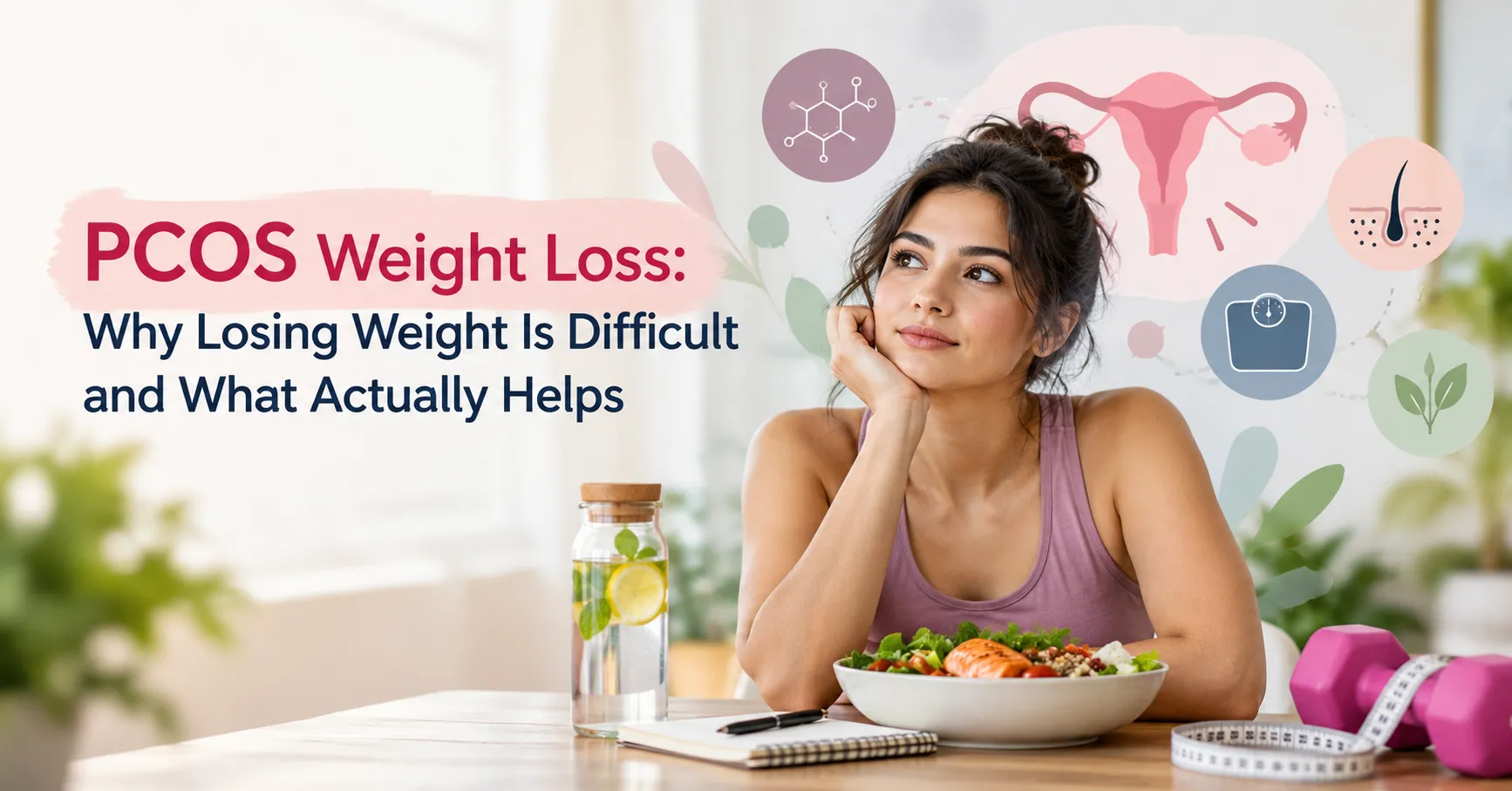
Are you eating less, exercising regularly and still finding it difficult to lose weight with PCOS? You are not alone.
PCOS weight loss can sometimes feel slower and more complicated than expected. Polycystic Ovary Syndrome (PCOS) is a hormonal and metabolic condition that can affect menstrual cycles, ovulation, insulin sensitivity, skin, hair and weight.
For some women, PCOS is associated with a greater tendency towards weight gain, particularly around the abdomen. However, PCOS does not mean that weight loss is impossible.
The key is understanding what may be affecting your weight and following a sustainable approach instead of depending on crash diets, extreme calorie restriction or short-term exercise plans.
This guide explains why losing weight with PCOS can be difficult, what a PCOS diet for weight loss may look like, which exercises can help and how to build habits that support long-term weight management.
Why Losing Weight With PCOS Can Be Difficult
PCOS affects women differently. Some women with PCOS are overweight, while others maintain a healthy weight. When weight management becomes difficult, several interconnected factors may be involved.
1. Insulin Resistance
Many women with PCOS also struggle with insulin resistance. In simple terms, the body has to work harder than usual to keep blood sugar under control. As a result, insulin levels may remain higher than they should be.
This can make weight management more difficult for some women, particularly when there is excess weight around the waist. It may also increase hunger or make it harder to manage food cravings.
The answer is not to completely stop eating rice or other carbohydrates. A more practical approach is to watch portions, choose foods rich in fibre, include enough protein in meals and stay physically active.
2. Hormonal Imbalances
PCOS can change the way certain hormones behave in the body. For some women, androgen levels become higher than usual. Women naturally produce these hormones too, but when the levels rise, the effects can become more noticeable.
This may show up as irregular periods, frequent acne, unwanted facial or body hair, thinning hair on the scalp, or difficulty with regular ovulation.
Hormones are only one part of the picture. Insulin resistance, eating habits, activity levels and other factors may also affect weight management. This is one reason why simply eating less may not always give a woman with PCOS the results she expects.
3. Genetics and Family History
PCOS often occurs within families.
Having a mother, sister or close relative with PCOS may increase your likelihood of developing the condition. A family history of metabolic conditions such as type 2 diabetes may also be relevant.
Genetics cannot be changed, but lifestyle factors such as diet, physical activity, sleep and regular medical monitoring can still play an important role in long-term health.
4. Weight and Lifestyle Factors
Being overweight does not directly cause PCOS. However, excess weight can worsen insulin resistance and may make some PCOS symptoms more difficult to manage.
At the same time, women with PCOS may experience challenges with long-term weight management.
This creates a cycle where metabolic problems can make weight management harder, while additional weight may further affect metabolic health.
The solution is not extreme dieting. Sustainable lifestyle changes that can be maintained over time are more useful.
Can You Lose Weight With PCOS?
Yes.
Having PCOS does not prevent you from losing weight.
The process may be slower for some women, but healthy lifestyle interventions remain a core part of PCOS management.
Importantly, the goal should not always be focused only on the number shown on the weighing scale.
Improvements in waist circumference, physical fitness, blood glucose management, eating habits and overall metabolic health are also meaningful indicators of progress.
Even when significant weight loss does not occur immediately, healthy eating and regular physical activity can still provide health benefits.
How to Lose Weight With PCOS
There is no single PCOS weight-loss plan that works for everyone. Your eating pattern, activity levels, medical history, sleep, stress and individual metabolic requirements should all be considered.
Here are some practical strategies.
1. Choose High-Fibre, Lower-Glycaemic Carbohydrates
Having PCOS does not mean you have to give up rice, roti or other carbohydrates. What matters more is the type of carbohydrate you choose, how much you eat and what you eat along with it.
For example, oats or millet can work well for breakfast, while brown rice, dal, beans or chickpeas can be included in main meals. Add plenty of vegetables and choose whole fruits instead of fruit juices whenever possible.
Also, try not to make carbohydrates the largest part of every meal. Pair rice, roti or other grains with vegetables and a protein source such as dal, eggs, paneer, fish or chicken. This makes the meal more balanced and can help you stay full for longer.
2. Increase Protein Intake
Protein can help with satiety and is particularly useful when trying to control overall calorie intake.
Useful protein sources include:
- Eggs
- Fish
- Chicken
- Paneer
- Tofu
- Greek yoghurt or curd
- Lentils
- Beans
- Chickpeas
Try to include an appropriate source of protein with your major meals rather than consuming most of your protein at only one meal.
3. Eat More Fibre
Fibre-rich foods help increase fullness and support overall digestive and metabolic health.
Good options include:
- Leafy vegetables
- Beans and lentils
- Whole grains
- Berries
- Guava
- Apples
- Citrus fruits
- Nuts
- Seeds
A simple rule is to make vegetables a substantial part of your main meals.
4. Include Healthy Fats
Fat does not need to be eliminated from a PCOS diet.
Instead, choose appropriate portions of healthier unsaturated fats from foods such as:
- Almonds
- Walnuts
- Flaxseeds
- Chia seeds
- Avocado
- Olive oil
- Fatty fish
You can have nuts, seeds and other sources of healthy fats, but it is easy to eat more than you realise. Take nuts as an example: eating a small handful is quite different from keeping the packet beside you and snacking from it throughout the day. Cooking oil is similar. You may not notice it on the plate, but the amount used while cooking still counts.
5. Reduce Added Sugar and Highly Processed Foods
Think about what you drink and snack on during a normal day. A sweetened coffee in the morning, packaged juice in the afternoon and a few biscuits with tea may not seem like much individually. Put them together, however, and they can add a considerable amount of sugar and extra calories to the day.
You do not need to clear everything out of your kitchen. Start with what you consume regularly. If packaged juice is an everyday habit, switch to whole fruit more often. If biscuits or fried snacks accompany every cup of tea, reduce how often you have them. Changes like these are usually more realistic than trying to follow a strict diet from day one.
Try to reduce:
- Soft drinks
- Sweetened tea and coffee
- Packaged fruit juices
- Cakes and pastries
- Biscuits
- Sweets
- Fried snacks
- Refined flour products
- Highly processed packaged foods
You do not need to classify every food as completely “good” or “bad.” What matters most is your overall eating pattern and how consistently you follow it.
PCOS Diet for Weight Loss: What Actually Helps?
There is no scientifically established single “best PCOS diet” that works better than every other dietary approach.
A sustainable eating pattern that matches your nutritional requirements, lifestyle, culture and food preferences is usually more practical than following a restrictive diet that you cannot maintain.
Foods to Include More Often
Build your meals around:
Vegetables: Leafy greens, beans, carrots, cucumber, tomatoes, broccoli and other colourful vegetables.
Protein: Eggs, fish, chicken, tofu, paneer, curd, lentils and legumes.
High-fibre carbohydrates: Oats, millets, whole grains, brown rice and pulses.
Whole fruits: Guava, berries, oranges, apples and other whole fruits rather than juices.
Healthy fats: Nuts, seeds, olive oil and other unsaturated fat sources.
Foods to Have Less Often
There is no need to label everyday foods as completely “good” or “bad” when you have PCOS. What matters is how often they appear in your diet and how much you eat at a time.
Take a regular day as an example. White bread or a maida-based breakfast, a packaged juice with lunch, biscuits with evening tea and a fried snack later can add up quickly. Sweets, cakes, fast food and sugary drinks are similar. Having them occasionally is different from making them part of your everyday routine.
Rice does not have to disappear from your plate either. The same goes for dairy or gluten unless your doctor or dietitian has advised you to avoid them for a specific reason. With rice, pay attention to the serving and what accompanies it. A moderate portion with vegetables, dal, curd, eggs, fish or another protein source makes for a more balanced meal.
A Simple PCOS-Friendly Plate Method
Complicated diet charts are not always necessary.
One practical approach is to divide your plate approximately into:
½ plate: Non-starchy vegetables
¼ plate: Protein
¼ plate: Whole-grain or high-fibre carbohydrates
¼ plate: Protein
¼ plate: Whole-grain or high-fibre carbohydrates
You can then include a small portion of healthy fats as appropriate.
Exercise for PCOS Weight Loss
Changing what you eat is only one part of managing weight with PCOS. Moving regularly matters too, and you do not need to begin with exhausting workouts.
Walking is a good place to start, especially if you have not been exercising regularly. A 30-minute brisk walk on most days of the week can gradually build your activity level. Cycling, swimming, dancing or any activity you genuinely enjoy can also work.
As your fitness improves, add some strength exercises during the week. Squats, lunges, resistance-band exercises or weight training are a few options. The aim is to combine movement you can maintain with exercises that improve muscle strength.
Current PCOS guidance recommends regular moderate or vigorous physical activity, with muscle-strengthening exercise included during the week. The amount can be built up gradually rather than trying to reach the full target immediately.
Cardio Exercise
Options include:
- Brisk walking
- Cycling
- Swimming
- Jogging
- Dancing
- Aerobic exercise
If you are currently inactive, you do not need to suddenly start intense workouts.
Start with manageable activity and gradually increase your duration and intensity.
Strength Training
Resistance training is also valuable.
Examples include:
- Squats
- Lunges
- Resistance-band exercises
- Weight training
- Body-weight exercises
Aim to include strength training approximately twice a week, depending on your fitness level and medical suitability.
Increase Daily Movement
A workout may take only 30 or 40 minutes, but what happens during the rest of your day matters as well. If your work involves sitting at a desk for long hours, look for simple reasons to get up and move.
Take a short walk after lunch, stand up between long work sessions or walk around while taking a phone call. If you have the option, use the stairs for a few floors instead of automatically taking the lift.
None of these activities needs to feel like a workout. The idea is simply to spend less of the day sitting and create more opportunities to move.
Does Sleep Matter for PCOS Weight Loss?
Sleep is often overlooked when discussing weight management.
Poor or insufficient sleep can affect appetite, energy levels, food choices and motivation to exercise.
PCOS is also associated with an increased risk of sleep problems, including obstructive sleep apnoea in some women.
Try to maintain a consistent sleep schedule and speak with a healthcare professional if you regularly experience symptoms such as loud snoring, waking unrefreshed or excessive daytime sleepiness.
Stress and PCOS Weight Management
PCOS can be frustrating to deal with, especially when irregular periods, acne, unwanted hair growth or weight concerns continue for months. That frustration can spill into everyday habits. Some people eat more when they are stressed, skip exercise after a difficult day or stay awake much later than usual.
There is no need to add a long list of “stress-management activities” to your routine. Start with something that actually fits your day. It could be a walk in the evening, ten quiet minutes away from your phone, yoga, spending time outdoors or simply getting to bed at a more regular time.
If stress begins to interfere with your sleep, eating habits or daily life, consider discussing it with a qualified healthcare or mental health professional.
Common PCOS Weight-Loss Mistakes
1. Following Extreme Diets
Very-low-calorie or highly restrictive diets may produce short-term changes but can be difficult to maintain. Focus on an eating pattern you can realistically follow for months and years.
2. Completely Eliminating Carbohydrates
Carbohydrates are not automatically the problem. Food quality, portion size and what you eat with the carbohydrate matter. Choose high-fibre carbohydrates and combine them with protein and vegetables.
3. Depending Only on Cardio
Walking and cardio are beneficial, but strength training should also be considered as part of a balanced exercise programme.
4. Expecting Immediate Results
Weight does not move in a straight line. You might see a lower number one week and very little change the next. Your period, water retention, a salty meal and even the time you weigh yourself can affect what appears on the scale.
Instead of reacting to every small change, compare your progress over several weeks. That gives you a much clearer picture of whether your current routine is working.
5. Focusing Only on the Scale
The weighing scale tells you only one thing: your weight at that particular moment. It does not tell you whether your clothes fit better, your waist measurement has changed, you can walk for longer without getting tired, or you are becoming stronger during workouts.
Pay attention to those changes too. For someone managing PCOS, progress may also show up in everyday habits; perhaps you are exercising more regularly, sleeping better or finding it easier to stick to your meal routine.
So, if the number on the scale is moving slowly, look at what else has changed before deciding that your efforts are not working.
6. Frequently Changing Diet Plans
Trying a new diet every few weeks can make PCOS weight loss more confusing than it needs to be. One week it may be a no-rice diet, the next a very low-carb plan, followed by fasting because the previous approach did not give quick results.
Give a sensible eating routine enough time to become part of your normal life. If something genuinely is not working, review it with your doctor or dietitian and make changes based on your needs rather than jumping to the next diet trend.
Small habits can sometimes interfere with progress. Read more about common weight loss mistakes and how they may affect results.
How Long Does It Take to Lose Weight With PCOS?
There is no fixed PCOS weight-loss timeline.
Results depend on factors such as:
- Starting weight
- Calorie intake
- Physical activity
- Sleep
- Medical conditions
- Medications
- Hormonal and metabolic factors
- Consistency with the programme
Instead of chasing rapid weight loss, focus on a realistic plan that can be maintained.
For women who are overweight, even modest weight reduction may provide health benefits.
When Should You Seek Professional Help?
If your periods have become very irregular or have stopped for several months, it is worth discussing this with a doctor rather than assuming PCOS is the only reason. The same applies if you notice rapid weight gain that you cannot explain or if your weight is not changing despite consistently working on your diet and activity.
Other changes deserve attention too. These may include worsening acne, increased facial or body hair, noticeable thinning of scalp hair, persistent tiredness or ongoing sleep problems. If you are trying to become pregnant and finding it difficult, speak with your doctor about that as well.
PCOS does not look exactly the same in every woman, and some of its symptoms can occur with other health conditions. A doctor can review your symptoms and medical history and decide whether any further tests are needed.
Frequently Asked Questions About PCOS Weight Loss
Does PCOS cause weight gain?
PCOS is associated with weight-management challenges in many women, but not everyone with PCOS gains weight or is overweight. Hormonal, metabolic, genetic and lifestyle factors can all influence body weight.
Can I lose weight if I have PCOS?
Yes. Women with PCOS can lose weight. A sustainable eating pattern, regular physical activity, adequate sleep and individualized healthcare support can help with long-term weight management.
Can weight loss improve PCOS symptoms?
For women who are overweight, modest weight loss may help improve metabolic and reproductive health and may improve some PCOS symptoms. However, healthy lifestyle changes provide benefits even when substantial weight loss does not occur.
What is the best diet for PCOS weight loss?
There is no single diet proven to be best for every woman with PCOS. A balanced eating pattern containing vegetables, whole fruits, protein, fibre-rich carbohydrates and healthy fats is a practical starting point.
Is rice completely off the list in a PCOS diet?
No. You do not necessarily need to eliminate rice.
Portion size matters. Pairing rice with vegetables, dal, curd, eggs, fish, chicken, paneer or another protein source can create a more balanced meal.
Whole-grain or less-refined carbohydrate options can also be included according to your nutritional requirements.
Should I stop eating carbohydrates if I have PCOS?
No. Completely eliminating carbohydrates is not routinely necessary.
Focus on high-fibre, minimally processed carbohydrate sources and appropriate portions rather than avoiding the entire food group.
Is walking good for PCOS weight loss?
Yes. Brisk walking is an accessible form of moderate-intensity physical activity and can form part of a PCOS exercise programme.
For better overall fitness, combine aerobic activity with strength training and reduced sedentary time.
Is strength training good for PCOS?
Yes. Muscle-strengthening exercise can be incorporated into a balanced physical activity programme. Adults can generally aim for muscle-strengthening activities on around two non-consecutive days each week.
Can I lose belly fat with PCOS?
You cannot selectively lose fat from only the stomach. Overall fat loss occurs through sustained changes in energy balance and lifestyle.
Regular exercise, balanced nutrition and long-term weight management may gradually reduce abdominal fat along with overall body fat.
Why am I not losing weight with PCOS despite dieting?
There can be several reasons, including inconsistent calorie intake, overly restrictive diets followed by overeating, low physical activity, sleep problems, medications or other medical and metabolic factors.
If you have followed a structured programme consistently and are still struggling, speak with a qualified healthcare professional rather than continuously reducing your food intake.
Do I need to lose weight to manage PCOS?
Not necessarily.
Not every woman with PCOS is overweight, and lifestyle management is recommended for overall health even without weight loss.
For women at a healthy weight, the focus may be on maintaining weight, preventing excess weight gain, improving fitness and managing individual PCOS symptoms.
Conclusion
PCOS weight loss can be challenging, but PCOS does not make weight loss impossible.
Instead of depending on crash diets, eliminating entire food groups or expecting rapid results, focus on habits you can maintain consistently.
A balanced diet containing protein, fibre-rich carbohydrates, vegetables and healthy fats, combined with regular physical activity, strength training, adequate sleep and appropriate professional support, can help improve long-term weight management and overall health.
Most importantly, PCOS management should be individualized. What works for one woman may not be appropriate for another.
At Kolors Healthcare, our doctors, nutritionists and physiotherapists create personalised weight-management plans based on individual requirements, lifestyle and goals.
Looking for professional support with PCOS weight management?
Book an appointment with Kolors Healthcare to discuss a personalised weight-management programme.
Explore Kolors Weight Loss Programs.
Note: This article is intended for general educational purposes and should not replace diagnosis or treatment from a qualified healthcare professional.