
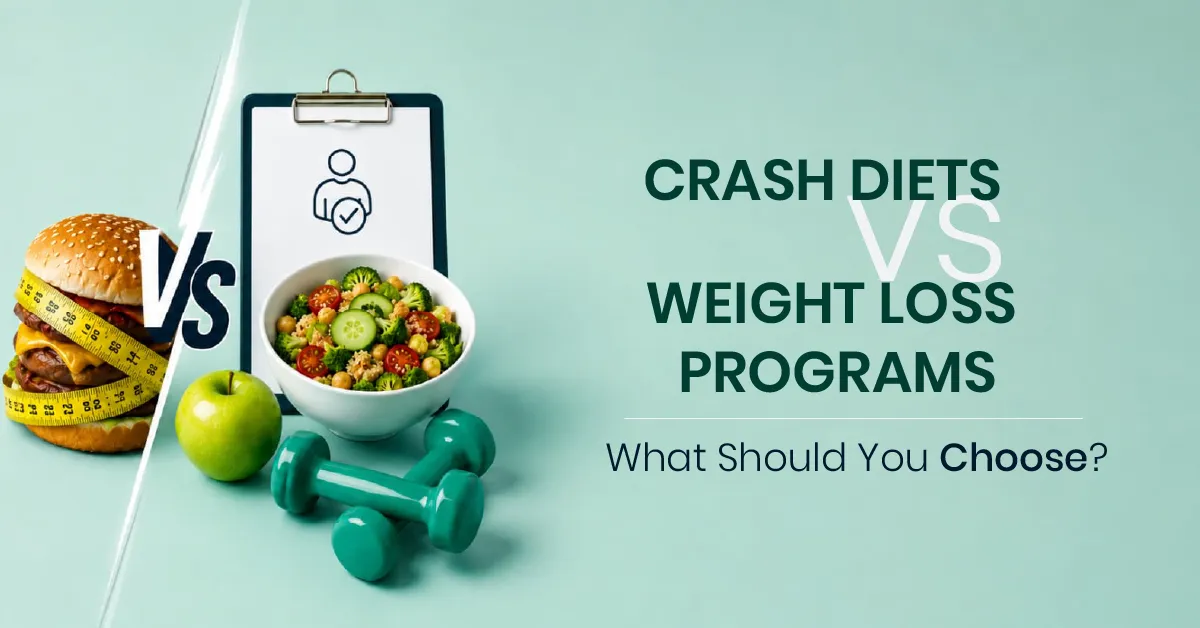
Most people have the urge to lose weight quickly before events or holidays, hence leading them to follow crash diets, which guarantee fast results within days or weeks. Such kinds of diets, although they seem appealing to many people, but lead to various complications and do not bring any lasting effects. It is necessary to understand the distinction between a crash diet and a weight loss program.
In professional weight loss programs, the focus is on healthy, sustained, and gradual weight loss. As opposed to crash diets, a weight loss program helps people develop healthy eating habits, be more active physically, and maintain the results. This article highlights the distinctions between crash diets and professional weight loss programs as well as the side effects associated with crash diets.
What Is a Crash Diet?
A crash diet refers to a temporary meal plan whereby a person eats very few calories to lose weight rapidly. Most crash diets involve consuming less than 500 calories per day. Other crash diets involve completely cutting out certain food types or consuming just one particular kind of food.
The primary reason why people opt for a crash diet is because of its promised immediate results. It is important to note that most of the immediate weight loss experienced in a crash diet involves water and muscle, and not fat. When regular eating starts, the lost weight gets gained back immediately.
Definition of a Professional Weight Loss Program
A professional weight loss program can be defined as a specially designed or medically supervised program that helps individuals lose weight in a safe manner and lead a healthy life. Professional weight loss programs are typically run by medical professionals, nutritionists, physical fitness experts, etc., who have a clear understanding of the health needs of every individual.
In contrast to the best weight loss approach that focuses on quick weight loss, professional weight loss programs help individuals adopt healthy ways of losing weight.
What are the differences between a crash diet and a weight loss program?
There is quite a simple difference between the two terms – fast and sustainable weight loss.
Although the main idea behind the crash diet is that it helps lose weight in an extremely quick way by reducing the intake of calories, such an approach implies that you do not lose only fat but also your body’s water and muscles as well. A crash diet is difficult to follow and causes hunger and exhaustion.
On the other hand, the weight loss program suggests slow and stable improvement. Personal nutrition programs, training, and other factors help achieve sustainable results.
Common Side Effects of Crash Diets
One problem associated with crash diets is the underestimation of their side effects since most people only concentrate on fast weight loss. However, drastic calorie reduction may have an impact on the whole body.
Some typical side effects may include fatigue, dizziness, headaches, weakness, dehydration, malnutrition, constipation, mood changes, and inability to concentrate. As a result of receiving small amounts of energy, metabolism can slow down so that future weight loss becomes even harder.
Another negative aspect of crash diets is the possibility of muscle loss, which affects strength and makes it harder for the body to burn calories. Moreover, some crash diets may result in the development of gallstones and hormonal disorders.
Advantages of Weight Loss Programs
Weight loss programs aim at protecting general health while ensuring the gradual elimination of body fat. The recommended approach is a balanced diet that involves carbohydrates, protein, fats, and minerals.
First, they assist in maintaining muscle mass while reducing fat. Exercise increases fitness, strengthens the cardiovascular system, and enhances flexibility and strength. Professional supervision helps in the detection of nutritional or medical problems.
A safe program teaches healthy lifestyles that will be adopted by the individual throughout the day. It is not about restriction but rather portion control, mindful eating, stress control, and physical activity. This significantly minimizes the risk of weight gain again.
Long-Term Effects Vs Short-Term Effects
While short-term weight loss might be a great achievement at first, sustaining it will become the hardest part in the future. One usually tends to recover all lost pounds within a couple of months because of returning to the same old eating habits.
The main idea of professional weight loss programs is the creation of long-term behavior patterns instead of short-term diets. People are taught about proper nutrition, eating schedules, physical exercises, emotional eating, and lifestyle management.
Weight loss is not the primary aim here; the improvement of the state of people’s health and their quality of life is what counts.
Whose Consideration Would Professional Weight-Loss Programs Deserve?
The importance of professional weight loss programs is particularly apparent in people who have experienced many instances of dieting, obesity, diabetes, thyroid problems, hypertension, or other diseases. Those who require personal help will find such programs useful since they will be supervised by professionals who will customize individualized plans for them.
Moreover, professional programs offer additional assistance through check-ups and progress monitoring, which increase people’s motivation and make them more willing to follow the recommended regimen.
Most Effective Strategy for Successful Weight Loss
In order to lose weight successfully, an individual needs to follow a weight loss strategy that includes eating healthy foods, engaging in physical activities, having a healthy lifestyle, and consulting specialists in some cases. It is impossible to find one diet that will suit everyone due to differences in people’s bodies, metabolism, and health conditions.
Rather than trying to use quick fixes, individuals need to develop habits that they will be able to practice throughout their lives. It is important to eat healthy foods, do physical exercises, drink water, control stress, and get enough sleep.
Conclusion:
In the comparison of a crash diet vs. weight loss program, the better option can easily be identified. Crash diets offer fast results; however, they are associated with numerous crash diet side effects, such as nutritional deficiencies, loss of muscle, weakness, and rapid regain of weight. They do not offer any success in the long run since they do not help form healthy habits.
A professionally designed weight loss program is the safest and most efficient alternative. It provides an individual with proper guidance, proper nutrition, regular checkups, and a carefully planned weight loss program. Such a healthy weight loss plan is aimed at forming habits that would ensure a safe weight loss programs, which makes them the most efficient way of losing weight.
If you are ready to start your weight loss process under professional supervision, we will be glad to help you with it. Kolors Healthcare offers individually designed weight loss plans.