
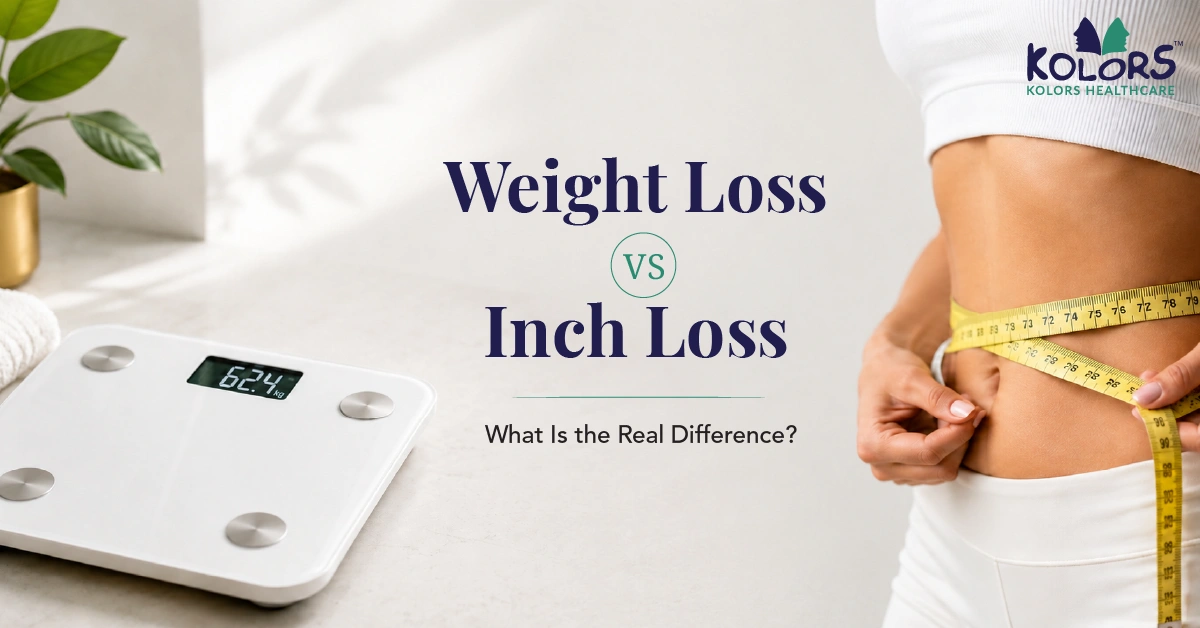
When you try a new balanced diet or a trending workout, you might lose more calories, get toned muscles, and build muscle. However, your weighing scale might not budge even if you can fit into a smaller dress size. While trying to achieve a healthier physique, it is natural for you to get confused about weight loss vs inch loss, as they might look like similar terms. While both these terms are related to a reduction in body size, they are indicators of body transformation. While one is related to your body composition, the other is related to managing body weight. Having a clear understanding of both inch loss and weight loss will help in creating realistic goals while trying to lose weight. Keep reading to know the actual difference between weight loss and inch loss, and which is better for your overall health to set perfect fitness goals.
Understanding Weight Loss
Losing excess pounds remains a high priority while embarking on a weight loss journey, which includes losing body fat, bone mass, water content, and muscle mass. To lose body weight effectively, the best approach would be creating a calorie-deficient diet paired with workouts. When you limit your calorie consumption to less than the ones burned off by workouts, you will begin to lose body weight[1]. It is essential to remember that a weight loss method will not differentiate between fat loss and muscle loss.
To achieve weight loss successfully, it is essential to make dietary adjustments along with regular physical activity. A well-balanced diet along with a strict workout regimen will help you lose weight at a consistent rate. Weight loss is actually measured by the numbers that your weight scale shows. However, it doesn’t differentiate what you are losing, which can be misleading when you lose fat but gain muscle. When compared to fat, muscle is much denser, making it occupy less body space. So even if the scale doesn’t indicate serious weight loss, your body might still be losing inches and give you a leaner look.
Understanding Inch Loss
When you lose excess body fat, it will be reflected by a reduction in the measurements of various body parts like thighs, waist, arms, and hips, which is referred to as inch loss. Such a reduction will occur even if the body weight doesn’t change even a bit, but as a result of targeted efforts for losing fat, which helps with building muscle mass. When you achieve an inch loss, achieving a sculpted figure is possible, and it also promotes your overall health. The first sign of inch loss is a decline in fat storage in areas like the thighs, hips, and waist.
When you have a protruding belly, it can be challenging to trim your midsection by initiating inch loss. Maintaining a higher waist measurement is owing to the accumulation of too much fat that can affect the health of your major organs, like the heart, and lead to type 2 diabetes. When performing strength training workouts every day, you begin to gain muscle mass, which makes your body firmer. So, even if you achieve a flat midsection, there will be no changes in the weighing scale. However, it doesn’t indicate that your weight loss plan is a failure, as inch loss is a better way to reduce body weight.
Weight Loss vs Inch Loss: The Actual Difference
It is essential to understand the difference between weight loss vs inch loss to create realistic health goals to achieve a fitter physique with better body composition.
1. Method of Measurement
Your weight loss can be tracked with the help of a weighing scale, which displays it in pounds or kilograms. Most often, you will depend mostly on the scale numbers to monitor your weight loss progress. It is essential to remember that there will be fluctuations in your body weight owing to water retention, dehydration, diet, and hormonal fluctuations. Owing to these factors, weighing scale readings cannot be considered accurate to know how much fat you have lost.
An inch loss can be determined by using a measuring tape to know the circumference of your waist, upper arms, hips, thighs, and chest. Determining inch loss offers a clear-cut picture of the transformation in fat distribution and body shape. Tracking the changes in inches will offer motivating and realistic outcomes instead of depending on the number your weighing scale shows.
2. Changes Experienced by Your Body
When undergoing weight loss, your body might lose a combination of water, muscle, and fat. Extreme weight loss options like fad diets or excessive cardio sessions would cause a reduction in muscle mass when fat is burned. It is not advisable to lose muscle mass as your muscles play a key role in regulating strength and metabolism to promote fitness[2].
While there is a reduction in your body fat levels, inch loss happens, thereby promoting muscle mass. Following a balanced diet and strength training regularly will tighten your muscles and offer a toned look. When your body fat level declines, the measurements of various parts will begin to reduce, and achieving a leaner physique becomes easier. In short, inch loss helps with body recomposition to improve overall health.
3. Physical Transformation Results
Weight loss will not show much difference in terms of your physical appearance, as the changes in body weight will be subtle. Even though you have lost several Kgs, you might feel highly disappointed when there is no visible body transformation. This occurs as weight reduction will occur along with muscle loss rather than fat reduction in targeted areas.
Inch loss, on the other hand, offers an amazing body transformation, which can be motivating. Your old clothes will begin to fit again, and the waist will appear smaller while other parts flaunt a defined look. Even when there isn’t a slight change in your scale weight, you will begin to feel healthier and lighter while looking leaner. Such noticeable changes in your appearance will make you motivated to achieve more body transformation.
4. Muscle and Fat Ratio
A major difference between weight loss vs inch loss lies in the link between fat and muscle. While fat uses up a lot of space in your body, getting accumulated muscles rapidly are much more compact and denser. It also indicates that two individuals with similar body weight might have different body composition based on their fat-to-muscle proportion.
When you exercise regularly, specifically perform strength training, you will lose more fat and gain more muscle. In such situations, there will be a decline in your body measurements even if there is only a slight decrease in body weight. So, you will be able to have an inch loss even if the scale doesn’t show significant weight loss.
5. Water Retention Effects
Several factors, like inadequate sleep, stress, hormone changes, dehydration, and consumption of high-salt foods, might contribute to temporary weight gain due to water retention. Such changes would be highly frustrating, especially if you depend on a weighing scale to monitor your weight loss efforts.
There would be no effect on inch loss measurements due to temporary water retention. Taking regular body measurements will help you get an insight into progress in body shaping and fat reduction. So, an inch loss is highly beneficial to track your transformation progress.
6. Fitness Approach
Weight loss programs are created to focus on calorie expenditure through cardio workouts and a calorie-deficient diet. Such methods would help decrease body weight and trigger muscle loss when not supported by resistance training and proper nutrition.
Inch loss programs are developed to target fat reduction and improve body toning by including a balanced diet, high resistance workouts, and strength training. Such approaches promote body composition by keeping muscles intact while lowering overall fat. So, your body will be proportionate with leaner and firmer muscles.
7. Suitability
Weight loss is ideal for people who have to deal with obesity or chronic diseases induced by obesity, like heart issues, high blood pressure, and diabetes. Lowering excess body weight will prevent the onset of health issues and promote overall wellness.
Inch loss programs focus on enhancing one’s overall appearance and fulfilling aesthetic goals like fitting into smaller clothes, toned muscles, better posture, and body shaping. People embarking on fitness transformations would pay attention to inch loss, as it helps them achieve a contoured body and boost confidence.
8. Psychological Effect
People focusing on the numbers on the weighing scale will generally feel demotivated and lose interest when their body weight reduction efforts don’t show much improvement. There wouldn’t be much improvement even if several positive changes happen internally, like a reduction of fat and muscle mass.
You will get motivated to lose body fat when you discover the number of inches you have lost. Witnessing well-defined muscles, smaller dress choices, and better body shape will enhance your confidence and help you follow healthy habits in the long run.
9. Results In the Long Run
Though extreme weight loss might deliver quick outcomes, maintaining it in the long run is impossible. Crash diets will make your metabolism slower, cut down energy levels, and might even cause weight regain after a few months.
Inch loss is healthier as it is made possible with balanced food, better lifestyle habits, workouts, and hydration, making the outcome sustainable[3]. This process causes gradual fat reduction and maintains muscle mass while making you feel better. The inch loss results are healthier, and the body transformation will last longer.
How To Balance Weight Loss and Inch Loss
It is essential to create a balance between weight loss vs inch loss for fulfilling long-lasting fitness objectives. This balance will help you stay focused on your overall health instead of relying on the numbers on the scale. Making holistic changes to lifestyle will ensure that the results are sustainable and better with time.
- Maintain a Holistic Approach: When following a holistic approach when trying to stay fit, you will be able to maintain these lifestyle changes for a long time instead of trying quick-fix diets that offer temporary results. It is essential to follow healthy lifestyle habits, including a nutritional diet and workouts that will be integrated into your everyday life[4]. Staying focused on the progress you make while making a note of gradual changes will help you stay committed and motivated to reach your fitness goals.
- Improve Body Composition: Pay attention to your body composition by eating a calorie-deficient diet with whole foods and engaging in workout sessions regularly, which will help maintain a healthy fat-to-muscle proportion[5]. When you begin to lose excess body fat, you will gradually build lean muscles to flaunt a toned and lean physique. Plus, improved body composition will also help you sleep better, manage stress effectively, and improve overall wellness.
- Positive Health Benefits:Apart from enhancing your body composition and offering sustainable outcomes, a holistic approach also provides several health benefits. When excess body fat is reduced with well-balanced nutrition and exercise, your cardiovascular health will improve, and the risk of developing chronic illnesses like diabetes can be prevented. Consulting a weight management specialist at a reputable clinic will help you get rid of inflammation, insulin resistance, and feel energized all day[6].
Wrapping Up
It is essential to understand the differences between weight loss vs inch loss to create an effective fitness plan. It is essential to incorporate targeted techniques to achieve inch loss as well as weight loss to balance your body composition and enhance your overall look. However, it is advisable to visit Kolors Healthcare to get customized weight loss or inch loss programs with a holistic approach to feel healthy and stay fit in the long run. Contact our weight management experts today to take the first step towards a better and healthier you!
Reference Links:
- https://www.health.harvard.edu/healthy-aging-and-longevity/simple-math-equals-easy-weight-loss
- Ashtary-Larky D, Ghanavati M, Lamuchi-Deli N, Payami SA, Alavi-Rad S, Boustaninejad M, Afrisham R, Abbasnezhad A, Alipour M. Rapid Weight Loss vs. Slow Weight Loss: Which is More Effective on Body Composition and Metabolic Risk Factors? Int J Endocrinol Metab. 2017 May 17;15(3):e13249. doi: 10.5812/ijem.13249. PMID: 29201070; PMCID: PMC5702468.- https://pmc.ncbi.nlm.nih.gov/articles/PMC5702468/
- ML Klem, RR Wing, MT McGuire, HM Seagle, JO Hill, A descriptive study of individuals successful at long-term maintenance of substantial weight loss, The American Journal of Clinical Nutrition, Volume 66, Issue 2, 1997 – https://www.sciencedirect.com/science/article/pii/S000291652317910X
- Institute of Medicine (US) Subcommittee on Military Weight Management. Weight Management: State of the Science and Opportunities for Military Programs. Washington (DC): National Academies Press (US); 2004. 4, Weight-Loss and Maintenance Strategies.Available from: – – https://www.ncbi.nlm.nih.gov/books/NBK221839/
- A. Bergman, J.C. Boyungs, E. Joseph, Walking, fitness, body composition and inch loss, Nutrition Research, Volume 16- https://www.sciencedirect.com/science/article/abs/pii/0271531796000905
- Cruz P, Johnson BD, Karpinski SC, Limoges KA, Warren BA, Olsen KD, Somers VK, Jensen MD, Clark MM, Lopez-Jimenez F. Validity of weight loss to estimate improvement in body composition in individuals attending a wellness center. Obesity (Silver Spring). 2011 Nov;19(11):2274-9. doi: 10.1038/oby.2011.102. Epub 2011 May 12. PMID: 21566566; PMCID: PMC4103167.- https://pmc.ncbi.nlm.nih.gov/articles/PMC4103167/